Your Window Is Measured in Seasons
The moment of physical reckoning
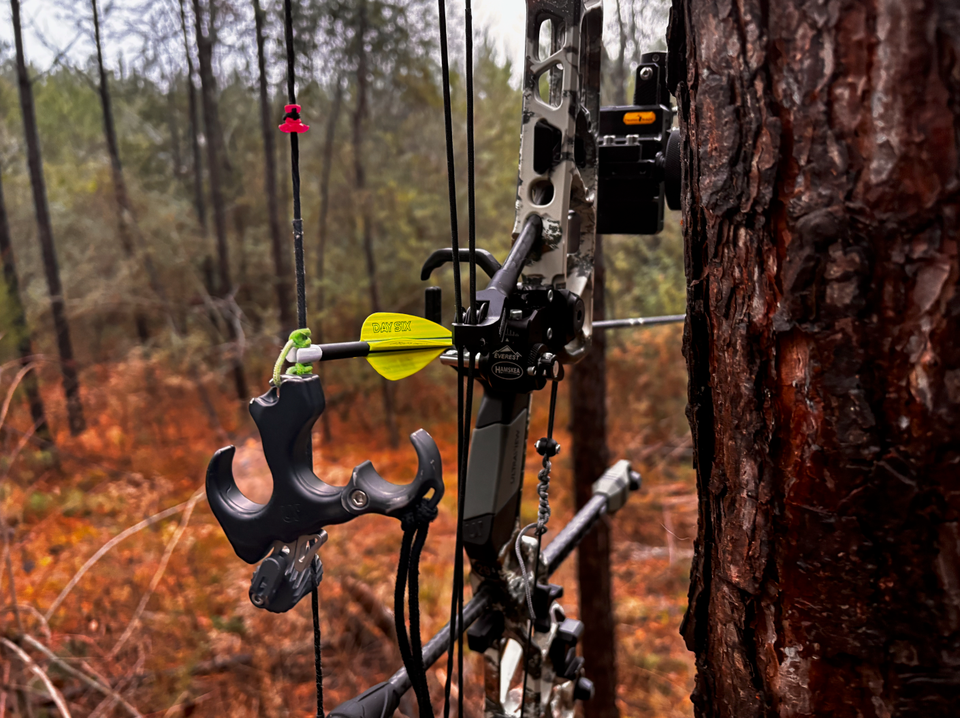
I was a mile in—tired, frustrated, and clinging to a tree like I might fall off. That ground wasn’t new. I’d walked it for years. But that day, my replaced knee locked up. Mid-climb, the joint froze. Stiff. Unsteady. I pushed one more rung, then stopped. And in that moment, I made a choice.
I got down.
Not because I wanted to. Because I had to. Because my body didn’t cooperate the way it used to. And I pivoted. I tried the ground game that morning instead. It didn’t go well. But here’s the part I want you to hear: that moment wasn’t the end of something. It was the beginning.
Everything I’d done before—pistol matches, rifle comps, decades in the outdoors —had led to that tree. All of it was asking me one question: Who are you becoming?
It’s not a theoretical question. It’s physical. It’s daily. Are you becoming the person who avoids discomfort, who lets capability slip while pretending nothing’s changed? Or are you becoming the hunter who adapts—who keeps showing up even when it’s hard, even when the aches set in, even when terrain you once floated across now demands every ounce of focus?
That question shapes more than just the hunt. It shapes your confidence. Your health. Your freedom. And here’s what’s at stake if you get it wrong: the margin for error is shrinking. Not in years. In seasons. That’s the truth many of us carry but rarely say out loud. You don’t have as much time as you think. And if you wait until your body makes the choice for you, you don’t get to decide when your final season happens. Something—or someone—else will.
If that sounds heavy, it’s because it is. But you’re not alone in it.
You’re the one who’s taught others how to hunt. You’ve made calm decisions under pressure, packed elk off steep ridges, and walked your share of miles. You’ve built a reputation on self-reliance. But lately, you’re noticing things. Recovery takes longer. Your knees catch more often. Steep terrain makes you pause. And somewhere in the quiet parts of your mind, a question’s been forming: “How many more of these do I have?”
I’m 62. I’ve had multiple joint replacements. I know that question. I know what it feels like to leave the mountain early and not tell anyone why. I know the gap between who you are and what you can still do. And I know that gap can feel like failure.
But it’s not. It’s information.
Your body isn’t broken. It’s less forgiving. Less tolerant of skipped workouts, poor sleep, low protein, or long strings of hard days without rest. What you’re experiencing isn’t decline. It’s a shift in the operating system. And that shift demands a response.
That’s the first pivot: from fighting your body to partnering with it.
At Hunter’s Mindset, we call that first pillar Hunt Strong. Strength, stamina, hydration, mobility, recovery—these aren’t abstract terms. They’re tools. And tools, used wisely, extend capability. But Hunt Strong doesn’t mean training like you’re 25. It means training for the field life you actually want to live. For decades of seasons, not a single one. I don’t muscle positions anymore. I build them. I don’t rely on grit. I rely on habits. Joint replacements didn’t end my hunts. They demanded that I slow down, refine my movement, and become more deliberate in how I prepare.
That brings us to the second pillar: Age Well. Aging well isn’t about luck. It’s about ownership. Movement, nutrition, hormone health, sleep, and recovery cycles—these are non-negotiables now. Not because we’re fragile. Because we’re smart. After 50, hero sessions come at a high cost. The work isn’t to prove toughness. It’s to preserve choice.
Think about that for a second: the real discipline isn’t the weight you can lift or the draw weight you hold. It’s the number of seasons you still get to choose how you hunt.
When you train, hydrate, sleep, and fuel well, you don’t just stay strong. You preserve judgment. And judgment—especially at our age—is what keeps you from becoming a liability in the field. You protect your ability to plan hunts you can complete. Routes you can return from. Distances you can recover cleanly.
Now picture this: three seasons from now, you’re back in country you’ve hunted for decades. But this time, your knee is steady. Your lungs are working with you. Your pack is dialed—lighter where it should be, stronger where it needs to be. You climb without hesitation. You settle into position without question. And when the animal steps out at the range you trained for, the shot is smooth, clean, confident. The return is safe. That’s not a fantasy. That’s what happens when you stop resisting change and start working with it.
Adaptation isn’t weakness. It’s how you buy more seasons.
So let me bring this home.
You might be wondering if you’re done. You’re not. You’re not broken. You’re just operating on a tighter schedule. And that schedule doesn’t demand retreat. It demands a response.
Hunt Strong. Age Well. Pass It On.
That’s the mission.
Because when you stay capable, you stay free. And when you stay free, you stay connected to the part of yourself that’s still in it—not just for one more season, but for all the seasons ahead you’re willing to earn, for yourself and your family.
Picture one more moment. You’re at camp. Your grandchild asks how to read a ridge. You don’t point from the truck. You walk beside them. You teach wind, terrain, and judgment. You show, in real time, what it means to adapt instead of quit. That is the legacy you get to leave.
Pick just one. Today.
So here’s what I’m asking: choose one limitation today. Just one. Maybe it’s your draw weight. Maybe it’s your knee. Maybe it’s your sleep. Pick it. Train for it. Not perfectly. Not all at once. Just start.
The window is open. Walk through it.
Because the long hunt was never about one animal or one year. It’s about all of them.