I Thought It Was Over. Then I Climbed That Tree.
There’s a moment every aging hunter eventually faces. A silent check-in. A whispered question:
Can I still make that ridge? Can I get back if something goes wrong? Am I still the hunter I was?
It doesn’t arrive with fanfare. It comes quietly—through a stiff knee on a steep climb, or a longer pause before the next step. And it brings with it the question we all learn to ask: Is this the beginning of the end?
I’m here to say it isn’t.
I’m 62. I’ve had two hip replacements and one knee replacement. I know what it feels like to wonder if it’s over. But I also know this: that question is the wrong one.
Because while you’re asking if you’re still that hunter, time keeps moving. And every season you spend negotiating with decline is one you’re not spending building what comes next.
This article is about that next chapter. Not a return to what you were—but the deliberate construction of what you can still become.
The Myth That Keeps You Out of the Field
Let’s name it clearly: the belief that joint replacement marks the end of your hunting life.
I believed it, too. When my surgeon scheduled my first hip replacement, I didn’t think “this will help.” I thought: this is how it ends. And I had good reason. The generation before us didn’t have the technology or protocols we have today. When the old-timers said, “once you go under the knife, you’re done,” they weren’t wrong—for their time.
But times have changed.
Technology has evolved. Rehab science has evolved. And most importantly, we can evolve—if we’re willing to do the work.
The Truth About Recovery (and Why It’s Not in Your Rehab Packet)
Your doctor will give you a plan. Some stretches, some physical therapy. They’ll say, “you’ll get most of your function back.” They focus on telling you that you'll be back close to normal. And it's true to a point.
"Your outcome is directly tied to your effort."
But they don’t say the rest:
Recovery is not a return to normal. It’s the beginning of a new normal—one that demands more awareness, more precision, and a deeper understanding of your body than ever before.
What makes most people disappointed after surgery isn’t the procedure—it’s the assumption that healing means going back to the way things were.
You don’t go back. I can't leg press heavy weights. And some of my resistance training has been modified. But I can carry a backpack.
You move forward differently.
What Precision Looks Like at 62
Before the replacements, I could power through bad form. I could muscle through fatigue. I didn’t have to think about movement—I just moved.
But after surgery, every misstep had consequences. So I slowed down. I re-learned how to build positions rather than force them. I started saddle hunting—not despite my joints, but because it demanded precision.
I plan my movement now. Every foot placement, every transition into position is deliberate.
And here’s the surprise:
I’m a better hunter for it.
I can’t kneel on my heels. But I can hike for miles. I can shoot matches. I can pack weight.
What I’ve lost in flexibility, I’ve gained in intention. And that trade is worth it.
You Don’t Finish the Work—You Grow Into It
After my knee replacement, I was devastated. I had had a great hip replacement, but this was a different outcome. I had to do it twice, and I still had pain that limited my movement after the second replacement. That moment, that thought—"I'm not going to be able to do this"—hit hard. The feelings of loss and anger pushed me through to keep adapting. I still had pain. I assumed I’d hit the limit of recovery.
Turns out, the pain wasn’t the knee. It was the other hip.
So I kept going. Another replacement. Another recovery. Another round of learning what my body was asking me to change.
Today, I know more about how I move than I ever did in my 30s. I train not to compete—but to stay capable. I watch how I stand. I adapt how I hike. I adjust how I recover.
Right now, I’m working on getting up from a chair without using my hands. It’s not glamorous. But it’s mine. And that’s the point. There is no finish line. Only layers of awareness that keep you in the game longer.
The Moment That Settled It
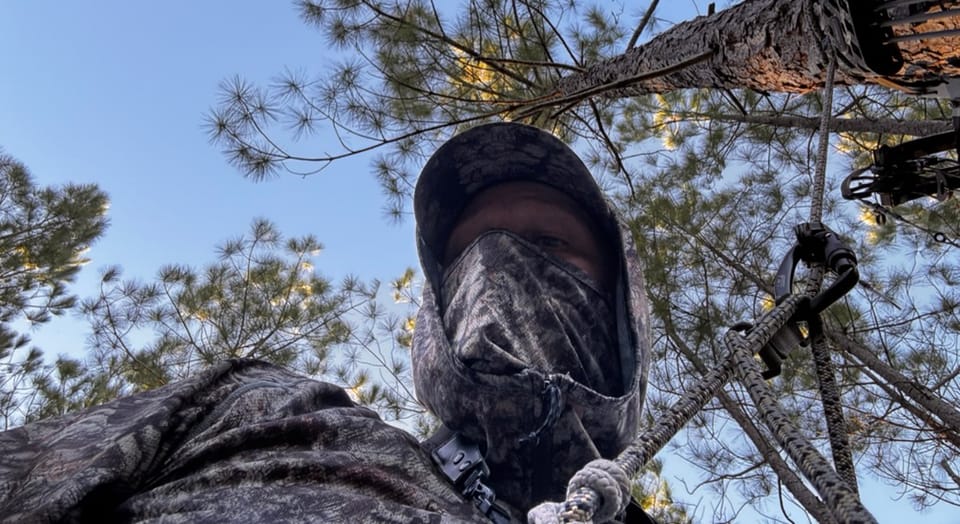
This past season, I climbed a tree in my saddle setup. I walked a mile. Choose my tree. And I was set up in 15 minutes.
I didn’t rush. I didn’t muscle through. I moved with control.
And halfway up, I stopped—not because I had to. Because I realized: this feels right.
Every painful rehab, every adapted routine, every slow morning—it all pointed to this moment.
I wasn’t just functioning. I was thriving.
That all-day hunt ended with more energy than I’ve had in years—not because I was younger. Because I had listened. Learned. Adjusted. Because I had adapted.
That tree didn’t prove I was still a hunter. It proved I had become a better one.
Capability Is Freedom
If you’ve been wondering how many seasons you have left, you’re not alone.
But that question—“How many more?”—misses the better one:
How well can I use the ones I’ve got?
You don’t need to hunt like you did at 35. You need to build the habits, precision, and awareness that let you hunt at 65—and still come home safe.
That’s what I’m doing now. Preparing for backpack hunts in the North Carolina mountains in 2026. It’s not a dream. It’s a plan.
And that plan is only possible because I’ve stopped fighting my body, and started working with it.
Start With One Thing
Tonight, pick one adjustment. One place where you’ve been compensating instead of adapting.
Train for it. Learn from it. Build with it. Don’t hide from the changes. Use them.
You are not broken. You are running a different operating system. One that requires precision, patience, and discipline. And one that, when used well, can extend your hunting life by decades.
Adaptation isn’t a loss. It’s a strategy.
It’s how you buy more seasons.
And I believe, deeply, that you have more of those seasons in you than you think.
You just have to start. Today. NOW.
If this is a path you’re committed to—if you want a place that speaks to your stage, your questions, and your reality—The Long Hunt is built for you. No noise. No hype. Just one article a week. Quietly delivered. Focused on the skills, habits, and decisions that keep you capable for decades to come. Join us there. Stay sharp. Stay steady. And stay in the hunt.